

Guide Guide: measure it, understand it, get quicker
The physics and practice behind 0-60, the quarter mile, braking, g-forces and lap times. Every number sourced, every calculation shown.
Start here
 Start hereHow to measure 0-60 with your phone: what an iPhone can doCan an iPhone time 0-60 mph? How GPS and motion sensors work, where the limits are, and a step-by-step guide to clean runs on a closed course.Read
Measuring & gear
 MeasuringIs phone GPS speed accurate? How Doppler measures speedPhone GPS speed comes from the Doppler effect, not map dots. How accurate it is according to research, and what 1, 10, 20 or 50 Hz mean at 60 mph.Read
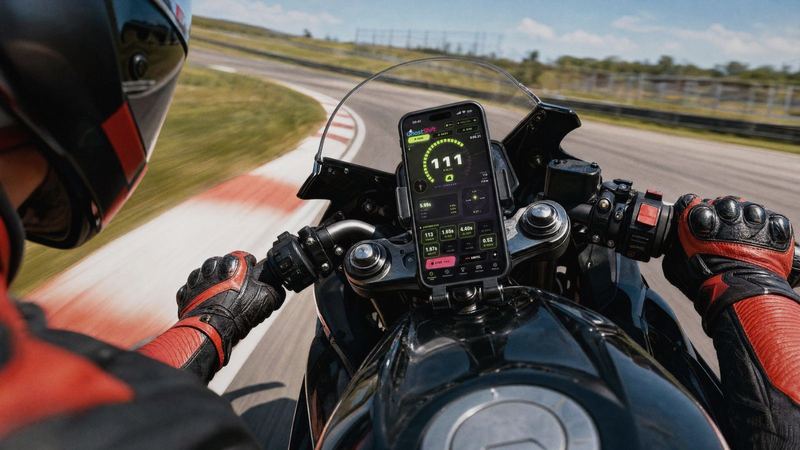 MeasuringiPhone dual-frequency GPS and sensors: which modelsWhich iPhones have dual-frequency GPS according to Apple, what the accelerometer, gyroscope and barometer add to timing 0-60, and where their limits are.Read
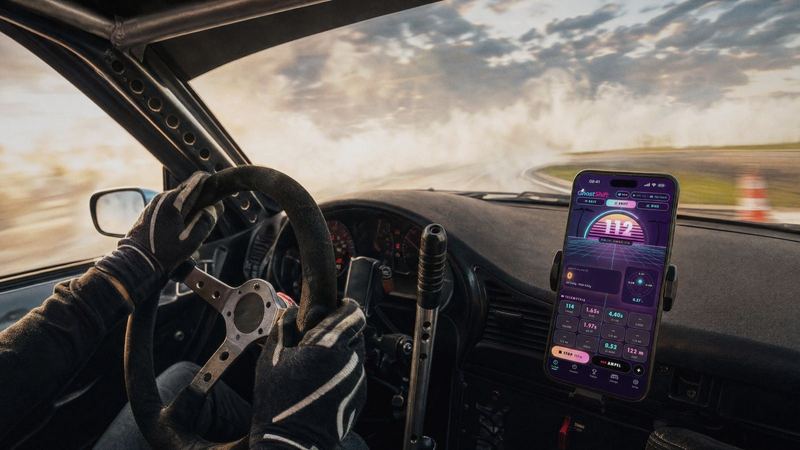 How-toPhone mount for track days: 6 checks for timed runsWhy your phone must sit rigidly for timed runs and laps, where it gets GPS reception and stays cool, and what Apple says about motorcycle vibration.Read
 TechOBD2 adapter for iPhone: Bluetooth LE or Wi-Fi onlyWhich OBD2 adapters work with an iPhone, how to spot them on a spec sheet, which engine data helps on timed runs and how often an ELM327 can deliver it.Read
Acceleration & drag
 Drag basics1-foot rollout meaning: why 0-60 times differ by up to 0.3 sWhat 1-foot rollout is, why US magazines use it and how much it cuts from 0-60 times: up to 0.3 s. With the physics, real test data and sources.Read
 Measuring in practiceReal-world 0-60 vs manufacturer claim: 5 reasons they differWhy real-world 0-60 times rarely match the brochure: no standard, rollout, air density, grade, weight and launch conditions, with worked numbers.Read Vehicle physicsHow to calculate 0-60 from hp and weight: 2-phase mathHow to calculate a 0-60 time from horsepower and weight: traction phase, power phase, drag, rolling resistance and shifts, with fully worked examples.Read Electric driveWhy do electric cars accelerate so fast? 3 reasonsWhy electric cars launch so quickly: torque from standstill, one gear, millisecond traction control, and why heat and state of charge slow repeated runs.Read
 Drag racing basics60-foot time: what's good and what it does to your ETYour 60-foot time measures launch and traction over 18.3 m. How much it decides the quarter mile: worked math, the 2-for-1 rule of thumb and trap speed.Read
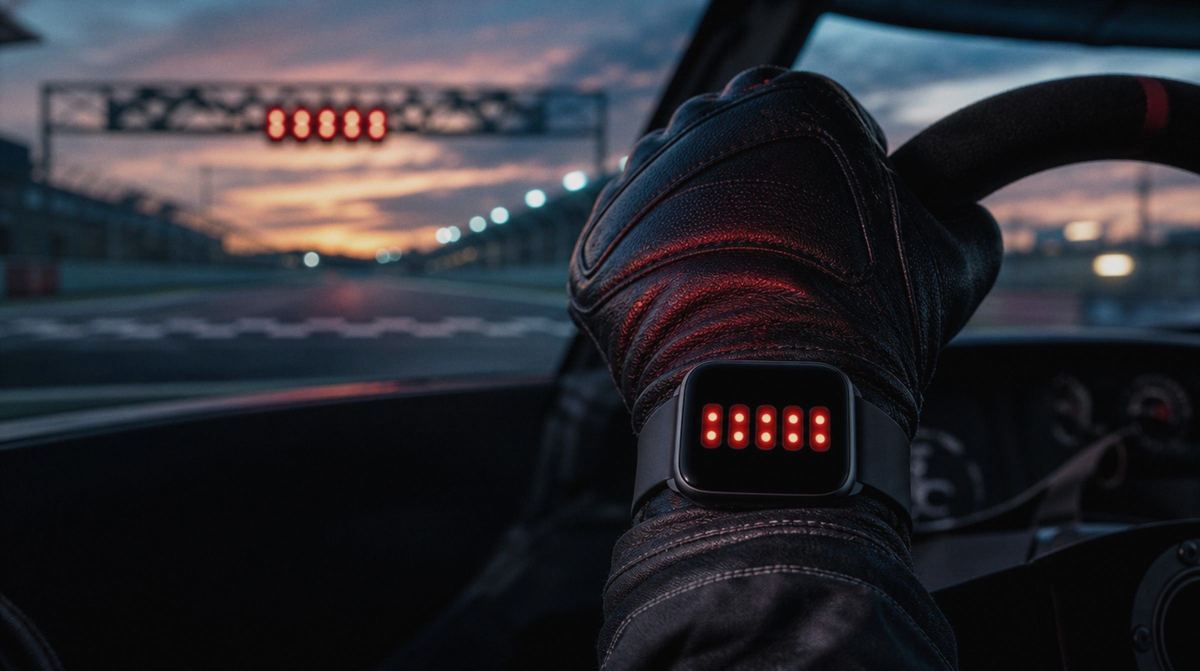 Drag racing basicsDrag racing reaction time: good, perfect and red lightsWhy NHRA pros average .030 s while human reaction takes over 0.2 s: Pro tree vs full tree, red lights, the .000 perfect light and season stats, sourced.Read
 Drag racing basicsQuarter mile in meters, and 1/8 to 1/4 mile conversionQuarter mile = 402.336 m, eighth mile = 201.168 m: every drag distance converted, why 1/8 to 1/4 mile ET factors don't hold, and what each split shows.Read
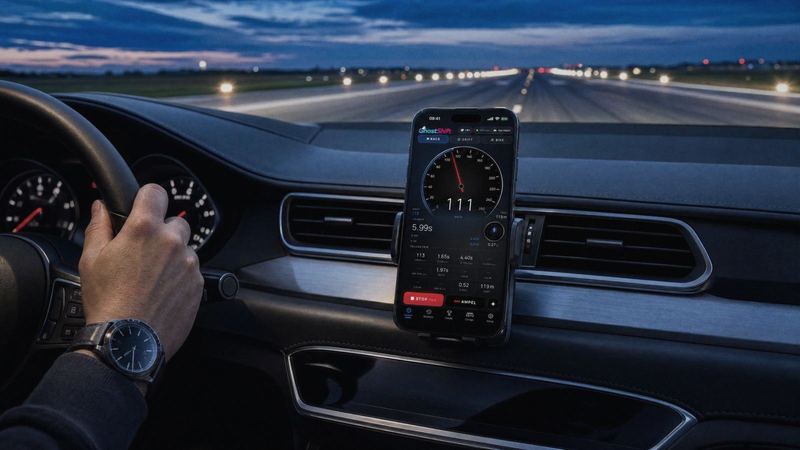 Measuring know-how60-130 mph times: why rolling acceleration shows powerWhy 60-130 mph measures power rather than traction: worked math with 10 % more power, aero drag, shift losses and how magazines run rolling-start tests.Read
Braking, g-forces & physics
 BrakingBraking distance from 100 km/h: 50 m rule vs 35 m testA driving-school rule says 50 m, the 2026 ADAC tire test measured 33.9 to 36.7 m from 100 km/h (62 mph). What the numbers mean in g and how to test it.Read Driving physicsG-forces in a car: about 1 g on the road, over 5 g in F1What 1 g means, how much lateral and braking g road cars, MotoGP bikes and F1 cars pull, what the friction circle shows and why you're pushed outwards.Read
 Measuring physicsSlope and wind: how much they shift your 0-60 timeA 1 % grade pulls on your car with 0.098 m/s². A worked model shows how much slope and wind shift 0-60 times and why serious tests run both directions.Read Measuring physicsDo cars run faster in cold weather? Air density and 0-60Air at 41 °F is over 8 % denser than at 86 °F. Why engines make more power in the cold, how turbos compare and what density altitude means for 0-60.Read
Track & laps
 Track dayFirst track day checklist: what to bring, how to time lapsFrom sign-up to lap list: what you need for your first track day, how to prepare your iPhone, which flags matter and how to read your laps afterwards.Read
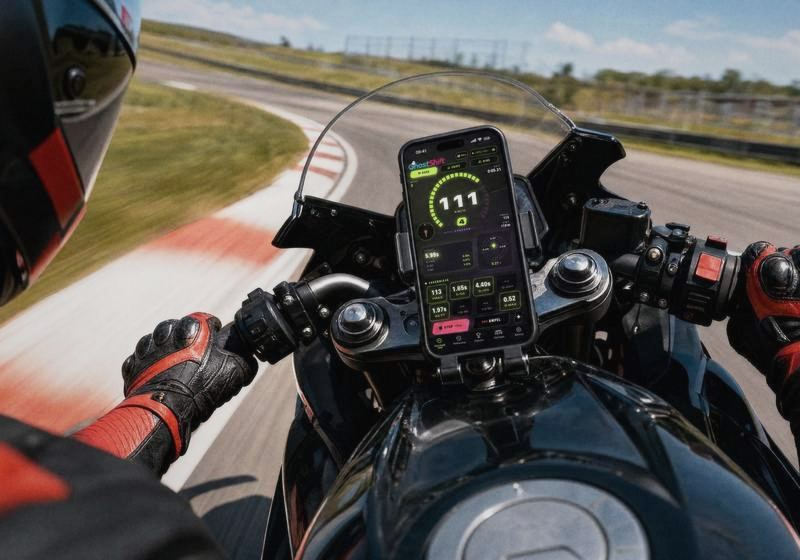 Lap timingHow to improve lap times with sector timesSector times, theoretical best and predicted laps explained, and how braking point, minimum speed and exit speed find you time. With worked numbers.Read
 KartingGo-kart lap timer on your phone: outdoor yes, indoor noTiming kart laps with an iPhone: why it only works outdoors, what your phone adds to the track's own timing, and how to use sectors to find time.Read
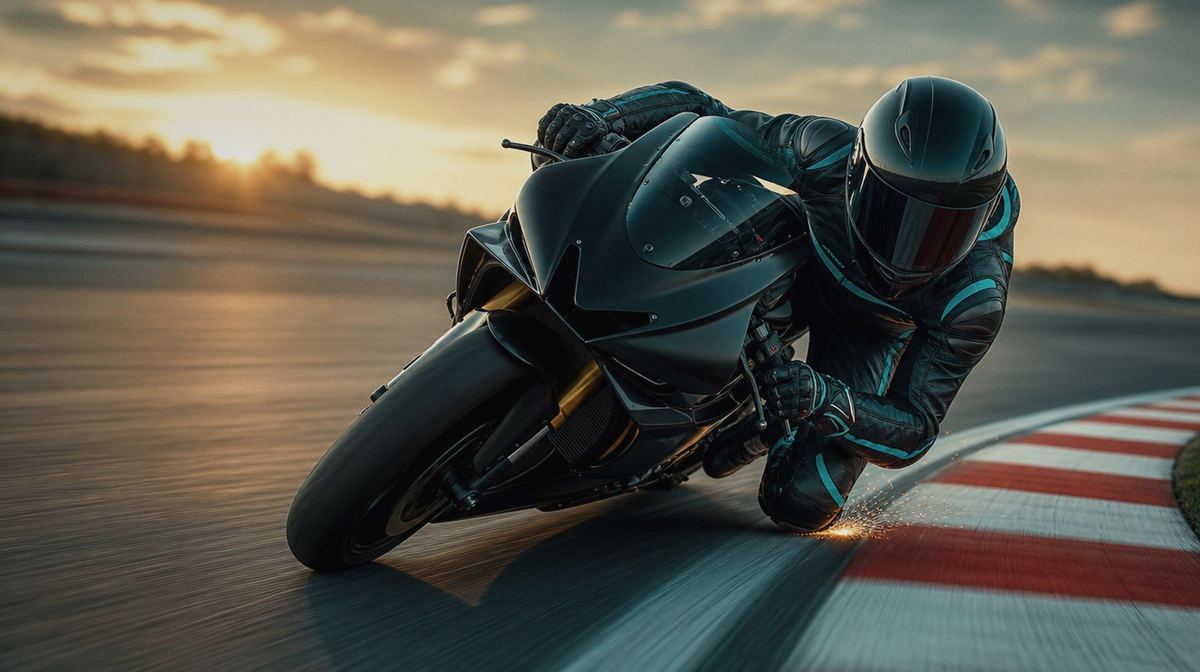 Motorcycle physicsMotorcycle lean angle: formula, limits and MotoGP's 64°How speed, corner radius and lean angle connect: the formula tan θ = v²/(r·g), worked examples, MotoGP figures and the real limits of tires and bikes.Read
GhostShift is not a calibrated or certified instrument: every value is an estimate from your iPhone's sensors. Only do timed runs on a closed course with the operator's permission.
